لطفا منتظر بمانید ...
0% Complete
رفتن به صفحه اصلی
ارائه مجازی مقاله
لیست نشست ها
نمایشگاه مقالات پوستری
مشخصات مقاله
کد مقاله
1242
منابع مقاله
عنوان
Novel Encapsulation Methods for Probiotics: A Systematic Review
نویسندگان
Arshia Neyshaboori - Mahmood Alizadeh Sani
چکیده
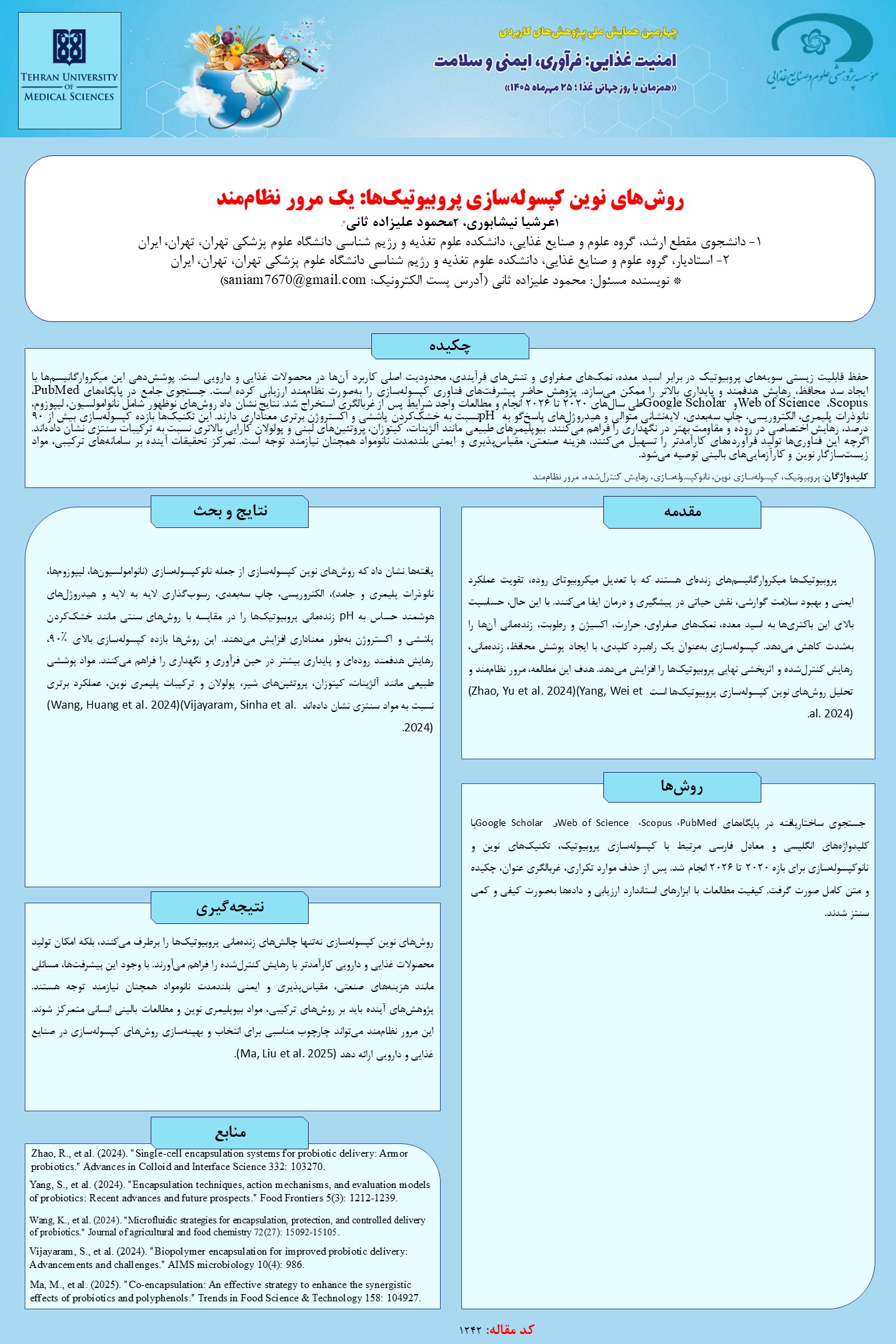
Introduction: Probiotics are live microorganisms that play a crucial role in prevention and treatment by modulating gut microbiota, enhancing immune function, and improving digestive health. However, the high sensitivity of these bacteria to gastric acid, bile salts, heat, oxygen, and moisture severely reduces their viability. Encapsulation, as a key strategy, enhances the survival, controlled release, and final efficacy of probiotics by providing a protective coating. The aim of this study is to systematically review and analyze novel encapsulation methods for probiotics. Search Strategy: In this systematic review, a structured and comprehensive search was conducted in reputable databases including PubMed, Scopus, Web of Science, and Google Scholar using keywords: “Probiotic Encapsulation”, “Novel Encapsulation Techniques”, “Nanoencapsulation of Probiotics”, “Microencapsulation”, and their Persian equivalents. Articles published between 2018 and 2026 were evaluated. After removing duplicate and review articles, titles, abstracts, and full texts were screened, and relevant studies focusing on novel encapsulation methods were selected. Study quality was assessed using standard tools, and data were synthesized both qualitatively and quantitatively. Results: Findings indicated that novel encapsulation methods-including nanoencapsulation (nanoemulsions, liposomes, polymeric and solid nanoparticles), electrospinning, three-dimensional printing, layer-by-layer deposition, and smart pH-sensitive hydrogels-significantly enhance probiotic survival compared to traditional methods such as spray drying and extrusion. These methods achieve encapsulation efficiencies above 90%, targeted intestinal release, and greater stability during processing and storage. Natural coating materials such as alginate, chitosan, milk proteins, pullulan, and novel polymer blends have shown superior performance compared to synthetic materials. Conclusion and Discussion: Novel encapsulation methods not only address the challenges of probiotic viability but also enable the production of more efficient food and pharmaceutical products with controlled release. Despite these advances, issues such as industrial costs, scalability, and long-term safety of nanomaterials still require attention. Future research should focus on combined methods, novel biopolymeric materials, and human clinical studies. This systematic review can provide a suitable framework for selecting and optimizing encapsulation methods in the food and pharmaceutical industries.
فایل ها
فایل jpeg-jpg پوستر
محتوای ارائه مجازی مقاله
نظرات
ثمین همایش، سامانه مدیریت همایش ها و جشنواره ها - نگارش 44.12.0

 فایل jpeg-jpg پوستر